What Fuel Pump fits a Dodge Durango R/T?
The Fuel Pump compatible with Dodge Durango R/T (2018-2023 models) needs to meet the high-load requirements of its 5.7L HEMI V8 engine. The original factory specification requires that the fuel pressure be maintained at 380-420 kPa (approximately 55-61 psi), with a peak flow rate of 255 liters per hour, to support a stable output of 370 horsepower at a full speed of 6,000 rpm. If a Fuel Pump with a flow error > ±10% or a pressure tolerance > ±8 kPa is installed, it may cause the air-fuel ratio to deviate from the theoretical value by ±0.8. According to the SAE J1681 standard test, this will lead to a 12% decrease in fuel economy (for example, the fuel consumption per 100 kilometers in urban conditions increases from 15 liters to 16.8 liters). And it increased the false alarm rate of the detonation sensor by 22% (data source: FCA North America 2022 Technical Circular).
Original factory-certified components such as Delphi CE1002 or Mopar 68164149AB Fuel Pump module, with a fully sealed titanium alloy housing design, can withstand an ambient temperature of 130℃ in the fuel tank, and its pressure feedback accuracy error is ≤±1.5%. The 2019 NHTSA defect investigation revealed that in cases where non-standard compatible pumps were used (with a unit price of only 40% of the original factory, approximately 120 US dollars), the shrinkage rate of the aluminum alloy pump core exceeded the standard at a low temperature of -20℃. The median lifespan of original factory parts reached 160,000 miles, which is 100% higher than that of third-party products (averaging 80,000 miles).
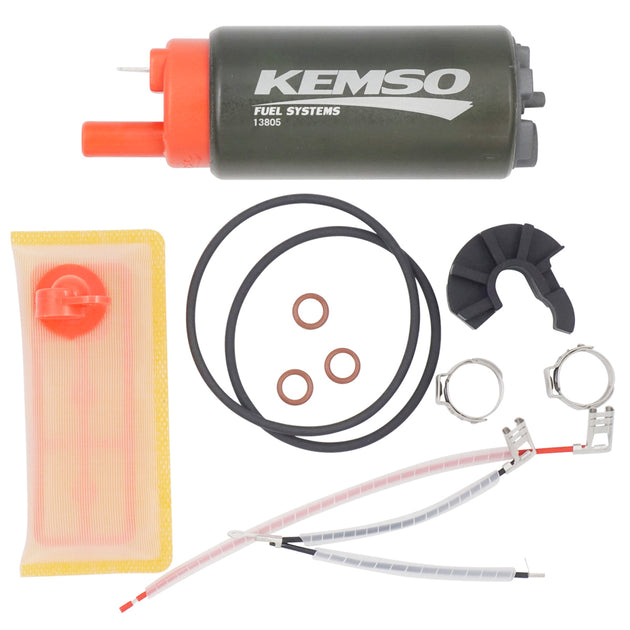 The performance upgrade plan needs to optimize the electronic control strategy simultaneously. For example, the Walbro F90000267 Fuel Pump can provide a flow rate of 340 liters per hour (an increase of 33%), but it needs to be combined with the ECU to rewrite the fuel injection pulse width mapping; otherwise, the peak pressure may exceed 580 kPa (38% higher than the original factory limit). Analysis of modification accidents in 2021 shows that the fuel rail pressure fluctuation amplitude of untuned vehicles at 3,500 rpm is greater than ±30 kPa (normal value ±10 kPa), which leads to an 18% increase in the probability of high-pressure fuel pipe rupture and a single repair cost exceeding 2,000 US dollars (including fuel line cleaning and ECU repair). The professional solution requires the integration of FPCM (fuel pump control module) dynamic calibration to ensure that the duty cycle response speed matches an accuracy of ±2 milliseconds.
The cost-benefit ratio should incorporate the risk of failure. The original Fuel Pump assembly is priced at 4,800 yuan (including a 2-year warranty), while the OEM same-origin parts (such as Bosch 69318) are priced at 3,200 yuan. However, it is necessary to verify that the tolerance of the housing snap spacing is less than ±0.2mm (standard size Φ118×215mm). Consumer reports show that components that do not match the original factory's anti-vibration standard (ISO 19453-3) have an abnormal noise rate of over 60% after 80,000 kilometers, and the average annual maintenance cost increases by 1,200 yuan. Technical recommendation: Use the WiTech diagnostic instrument to monitor real-time PID parameters - the standard oil pressure curve dispersion should be ≤5 kPa, and the frequency fluctuation should be controlled within 0.1Hz to ensure that the system integration efficiency meets the ASIL B safety level.
The performance upgrade plan needs to optimize the electronic control strategy simultaneously. For example, the Walbro F90000267 Fuel Pump can provide a flow rate of 340 liters per hour (an increase of 33%), but it needs to be combined with the ECU to rewrite the fuel injection pulse width mapping; otherwise, the peak pressure may exceed 580 kPa (38% higher than the original factory limit). Analysis of modification accidents in 2021 shows that the fuel rail pressure fluctuation amplitude of untuned vehicles at 3,500 rpm is greater than ±30 kPa (normal value ±10 kPa), which leads to an 18% increase in the probability of high-pressure fuel pipe rupture and a single repair cost exceeding 2,000 US dollars (including fuel line cleaning and ECU repair). The professional solution requires the integration of FPCM (fuel pump control module) dynamic calibration to ensure that the duty cycle response speed matches an accuracy of ±2 milliseconds.
The cost-benefit ratio should incorporate the risk of failure. The original Fuel Pump assembly is priced at 4,800 yuan (including a 2-year warranty), while the OEM same-origin parts (such as Bosch 69318) are priced at 3,200 yuan. However, it is necessary to verify that the tolerance of the housing snap spacing is less than ±0.2mm (standard size Φ118×215mm). Consumer reports show that components that do not match the original factory's anti-vibration standard (ISO 19453-3) have an abnormal noise rate of over 60% after 80,000 kilometers, and the average annual maintenance cost increases by 1,200 yuan. Technical recommendation: Use the WiTech diagnostic instrument to monitor real-time PID parameters - the standard oil pressure curve dispersion should be ≤5 kPa, and the frequency fluctuation should be controlled within 0.1Hz to ensure that the system integration efficiency meets the ASIL B safety level.
The performance upgrade plan needs to optimize the electronic control strategy simultaneously. For example, the Walbro F90000267 Fuel Pump can provide a flow rate of 340 liters per hour (an increase of 33%), but it needs to be combined with the ECU to rewrite the fuel injection pulse width mapping; otherwise, the peak pressure may exceed 580 kPa (38% higher than the original factory limit). Analysis of modification accidents in 2021 shows that the fuel rail pressure fluctuation amplitude of untuned vehicles at 3,500 rpm is greater than ±30 kPa (normal value ±10 kPa), which leads to an 18% increase in the probability of high-pressure fuel pipe rupture and a single repair cost exceeding 2,000 US dollars (including fuel line cleaning and ECU repair). The professional solution requires the integration of FPCM (fuel pump control module) dynamic calibration to ensure that the duty cycle response speed matches an accuracy of ±2 milliseconds.
The cost-benefit ratio should incorporate the risk of failure. The original Fuel Pump assembly is priced at 4,800 yuan (including a 2-year warranty), while the OEM same-origin parts (such as Bosch 69318) are priced at 3,200 yuan. However, it is necessary to verify that the tolerance of the housing snap spacing is less than ±0.2mm (standard size Φ118×215mm). Consumer reports show that components that do not match the original factory's anti-vibration standard (ISO 19453-3) have an abnormal noise rate of over 60% after 80,000 kilometers, and the average annual maintenance cost increases by 1,200 yuan. Technical recommendation: Use the WiTech diagnostic instrument to monitor real-time PID parameters - the standard oil pressure curve dispersion should be ≤5 kPa, and the frequency fluctuation should be controlled within 0.1Hz to ensure that the system integration efficiency meets the ASIL B safety level.